

How to Get Rid of Fungus Gnats in Houseplants (For Good)
Tiny flies hovering around your plants? Here's exactly how to get rid of fungus gnats — what's causing them, how to kill the larvae in the soil, and how to make sure they never come back.
FUNGUS GNATS 101
Valerie
6/14/20268 min read

those tiny flies hovering around your plants aren't fruit flies. here's what they actually are - and how to kill them.
It's not you. It's fungus gnats. And they're fixable.
What Are Fungus Gnats, Exactly? | How To Know If You Have Fungus Gnats | Why They Showed Up | How To Get Rid Of Fungus Gnats: The Full Approach | The Short Version | How Long Does It Take To Get Rid Of Fungus Gnats? | How To Keep Fungus Gnats From Coming Back | Not Sure What You're Dealing With? | Frequently Asked Questions About Fungus Gnats | Create a Reliable Indoor Plant Care Foundation
Fungus gnats are small, dark flies that look a lot like fruit flies — but they're not interested in your bananas. They live in your plant's soil.
The adults are mostly just annoying. The larvae are the actual problem.
If your soil stays consistently damp — which is easy to do when you water on a schedule instead of based on what the plant actually needs — you've basically set up a nursery for them.
What Are Fungus Gnats, Exactly?
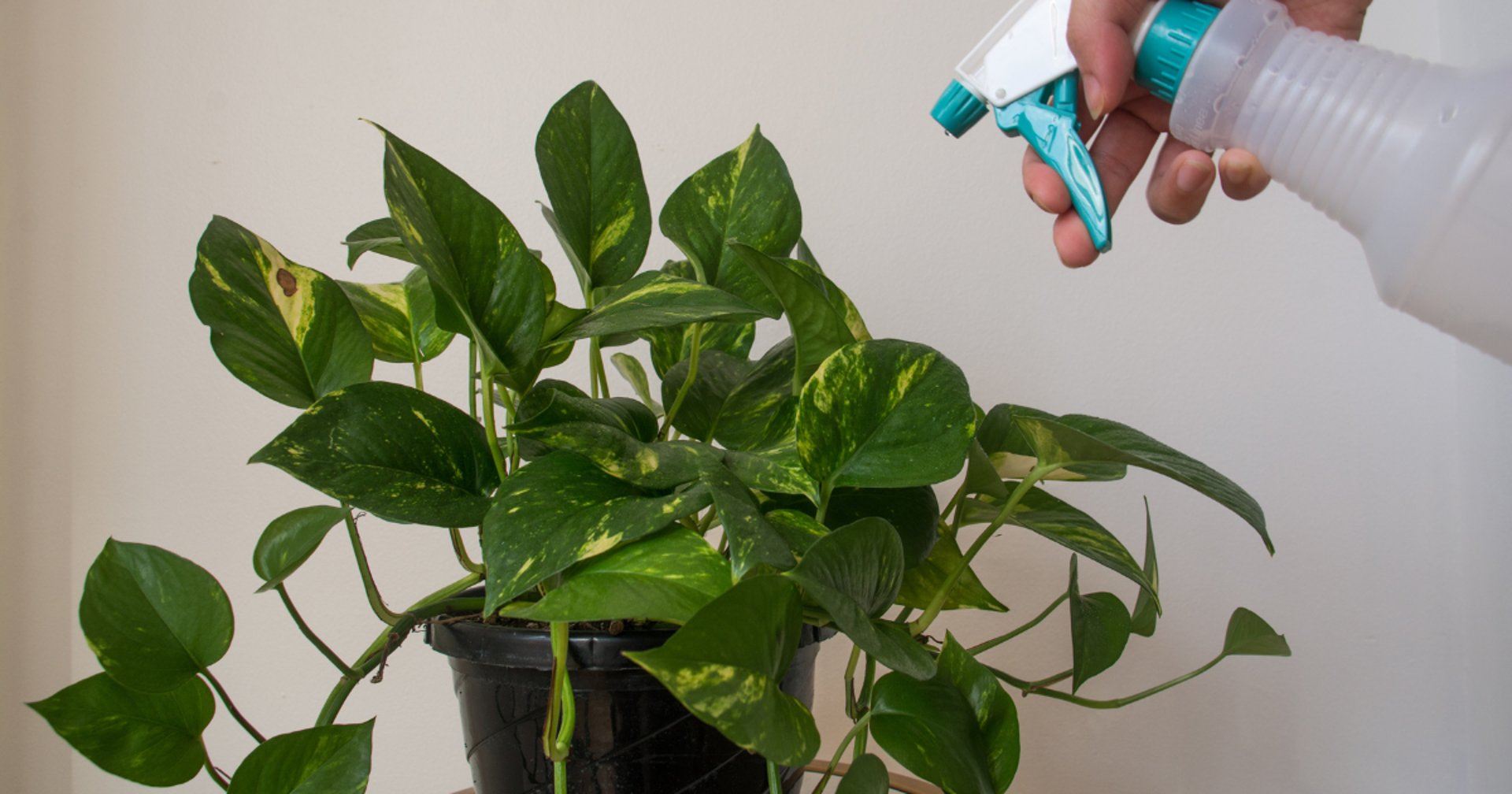
Tiny black flies hovering near your plants or flying up when you disturb the soil
- flies that look like they're walking on the soil surface
- small, translucent larvae in the top inch of soil if you look closely
- plants that seem like they're declining for no obvious reason (larvae feeding on roots)
The #1 sign: they come from the soil, not from your kitchen or a piece of fruit. That's how you know it's gnats and not fruit flies.
How To Know If You Have Fungus Gnats
Fungus gnats need two things: moisture and organic material. Most potting mixes have plenty of both.
This is why fungus gnats are so closely tied to overwatering. Not because overwatering causes gnats exactly, but because damp soil never gives the gnat population a reason to die off.
The fix isn't just killing the flies you can see. It's breaking the cycle.
Why They Showed Up
How To Get Rid Of Fungus Gnats: The Full Approach
You need to hit this on two fronts at once, the adults flying around, and the larvae in the soil. Doing only one won't work.
1. Let the soil dry out
This is the most important step and the one most people skip because it feels scary.
Let the top 2 inches of soil dry out completely before you water again. For most houseplants, this is fine. For succulents and cacti, you can go even longer. Fungus gnat larvae can't survive in dry soil — they need moisture to develop. Drying out the top layer interrupts the breeding cycle faster than almost anything else.
If you've been watering on a set schedule (every Sunday, every 7 days, etc.) — stop. Water based on the soil, not the calendar.
2. Use mosquito bits
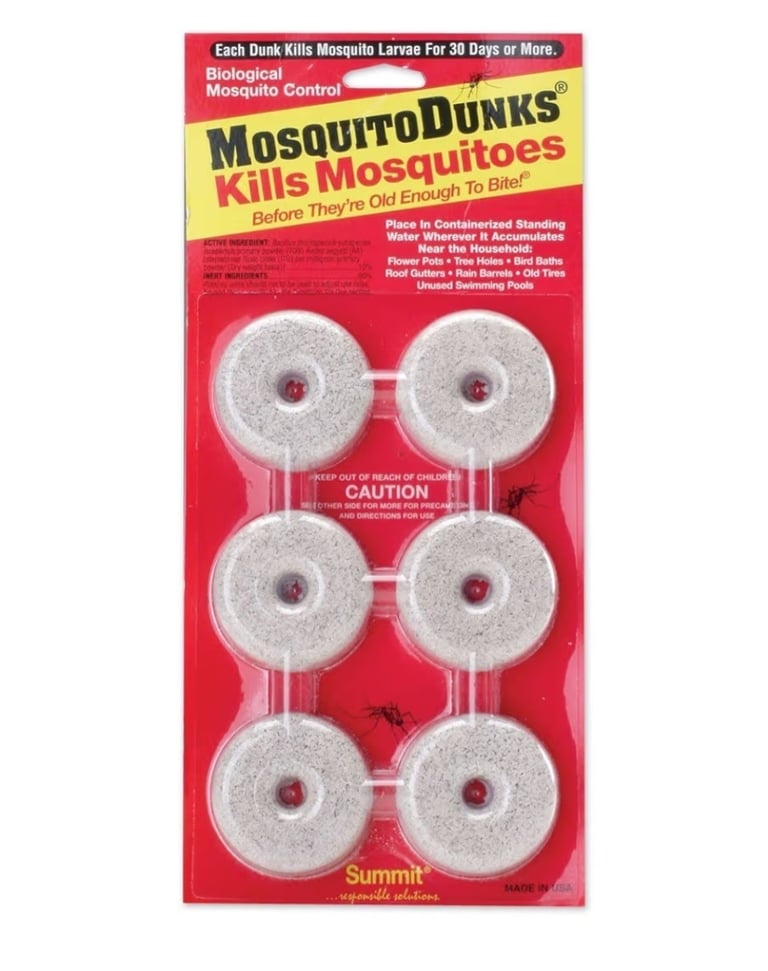
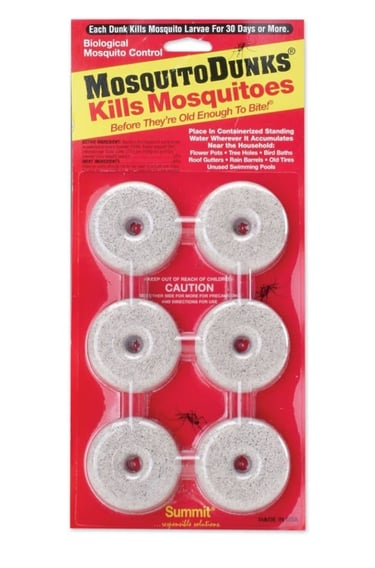
Mosquito Bits are the sleeper product for this problem. They contain Bacillus thuringiensis israelensis (Bti), a naturally occurring bacteria that kills fungus gnat larvae in the soil without harming your plant, your pets, or you.
Sprinkle them on top of the soil, water them in, and they get to work. You can also soak them in water overnight and use that water to drench the soil — this gets the Bti deeper into the root zone.
Most people see results within 1–2 watering cycles. Keep using them for a few weeks to make sure you've caught every generation.
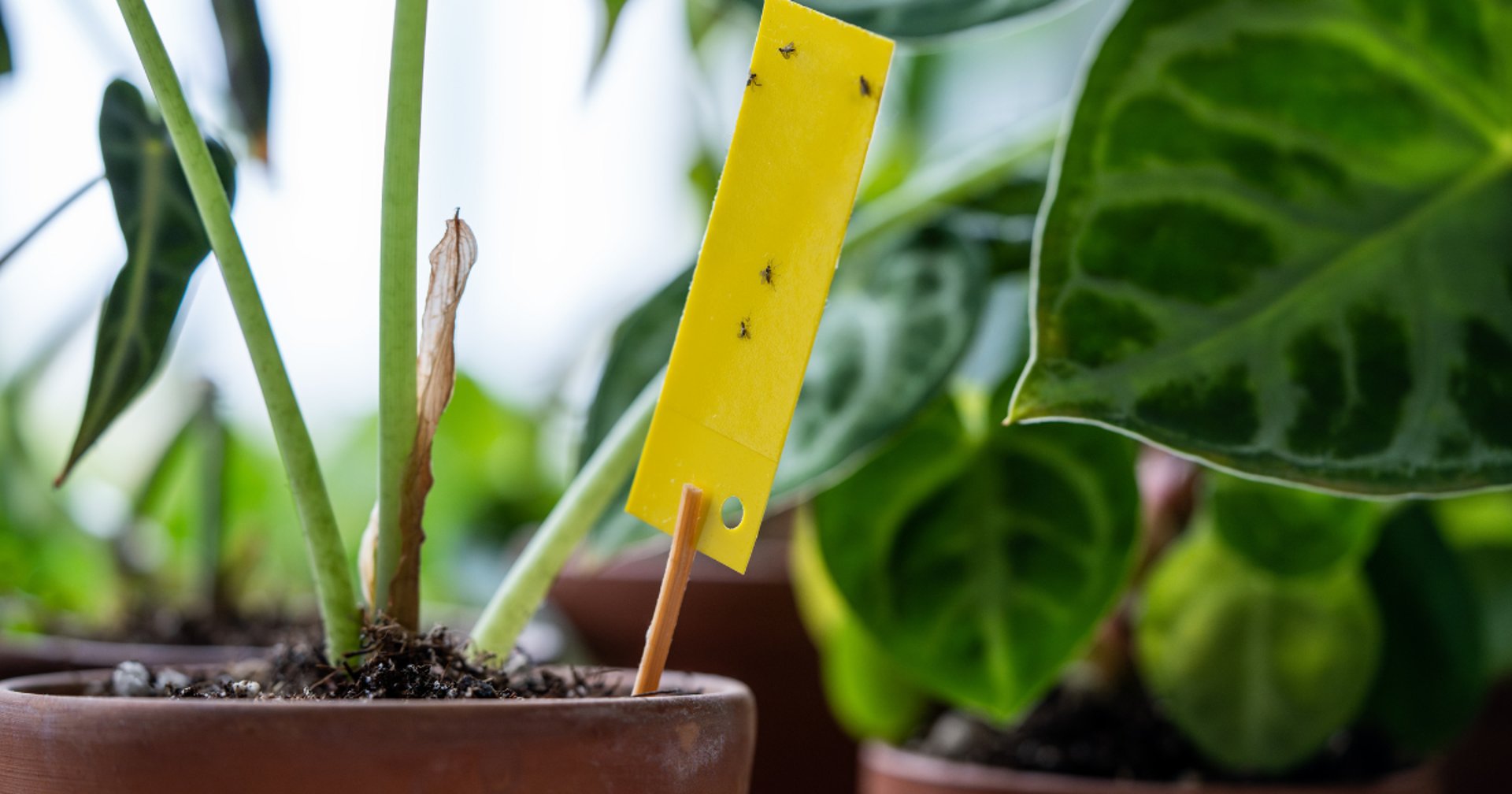
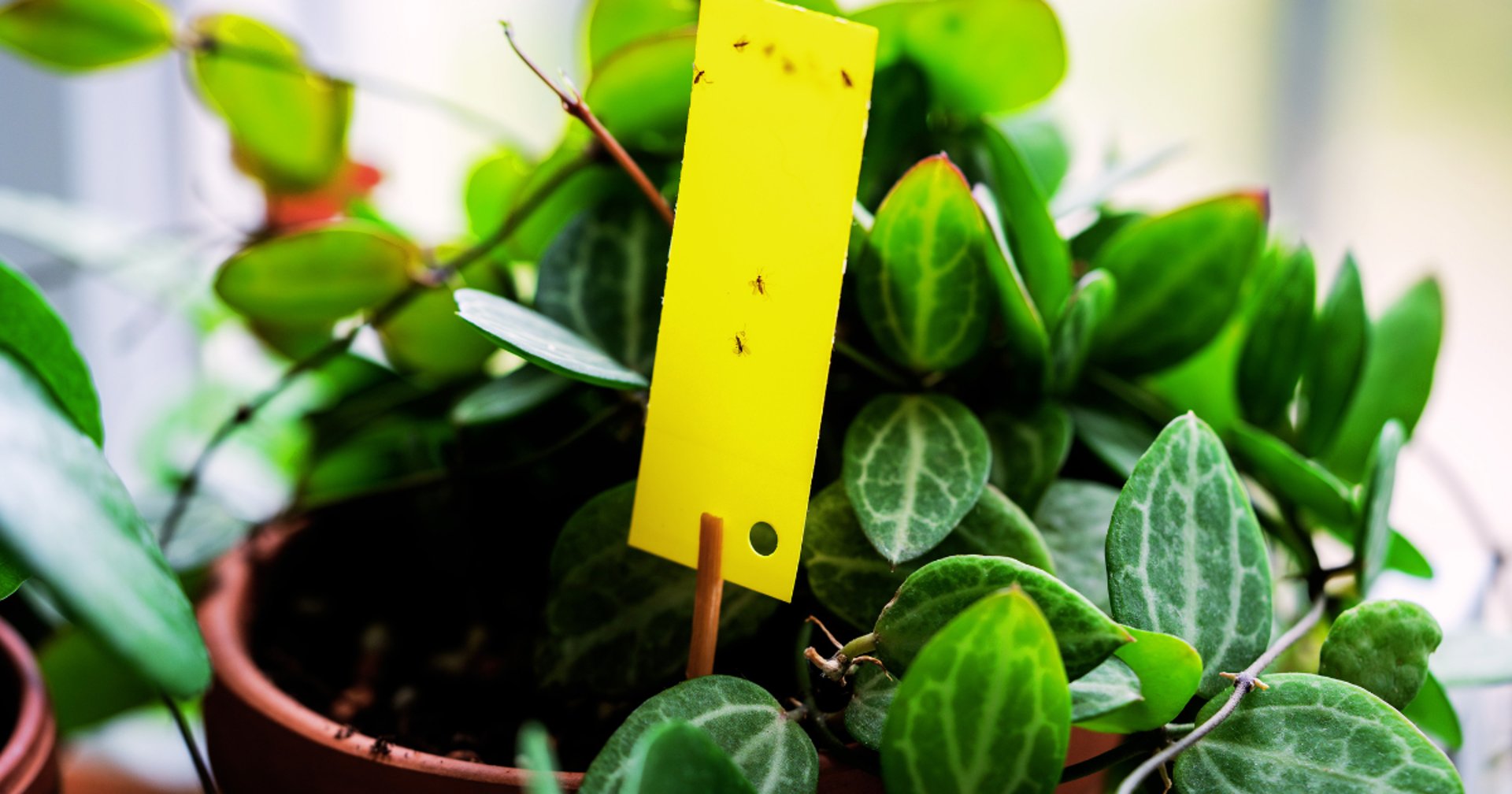
3. Set out sticky traps
Catch the adults before they can lay more eggs. They won't solve the problem on their own, but they break the reproduction cycle while the Mosquito Bits handle the larvae underground.
Stick them into the soil right next to the base of the plant. Yellow is the most effective color — gnats are specifically attracted to it.
These also work as a monitoring tool. Once the traps stop catching anything, you know the population is under control.




4. Treat with neem oil (optional but effective)
Applied as a soil drench adds another layer. It disrupts the life cycle of larvae and also has antifungal properties that help clear up the damp, fungus-friendly environment they were thriving in.
Mix it according to the bottle directions, and water it into the soil like you normally would. Do this once a week for 2–3 weeks alongside your other treatments.
Note: neem oil has a strong smell. It dissipates, but fair warning.
Ready to actually kill the larvae? here's the exact method that works.
Fungus gnats are a moisture problem, not a bad luck problem. Dry out your soil, add Mosquito Bits, hang sticky traps, and be patient. Two to four weeks and they're gone.
The real fix is learning to read your soil instead of watering on autopilot — and once you do, this probably won't happen again.
looking for a way to actually track when you last watered? the quiet at home plant care tracker was made for exactly this.
The Short Version
Realistically: 2–4 weeks if you're consistent.
You'll likely see the adult population drop within the first week once you combine dry soil + sticky traps. The larvae take a little longer to fully clear out. Keep treating through at least two full soil-dry-out cycles to make sure you've broken every generation.
If you stop early because it seems like they're gone, they'll be back.
How Long Does It Take To Get Rid Of Fungus Gnats?
The long-term answer is the same as the short-term fix: stop watering before the soil is ready.
Fungus gnats come back because the conditions that attract them came back. If your soil is staying consistently moist in the top inch or two, they'll find it eventually.
A few things that help long-term:
- water less frequently than you think you need to — most houseplants are more drought-tolerant than we give them credit for
- check the soil before you water, not the calendar
- make sure your pots have drainage so water isn't pooling at the bottom
- let the top layer of soil dry out between waterings — this alone prevents most infestations
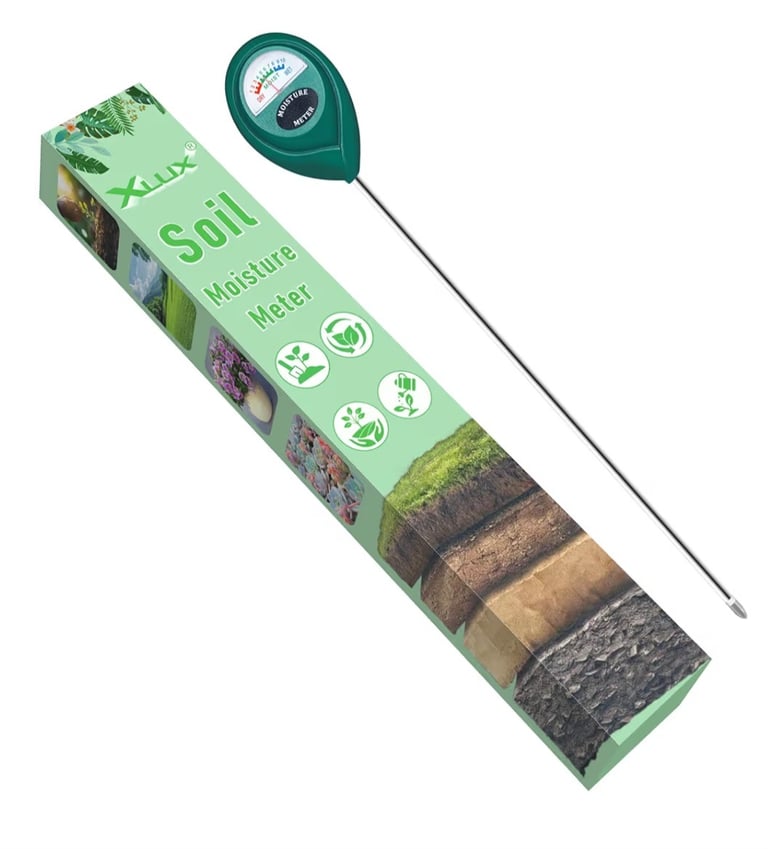
If you're someone who forgets to check or tends to overwater out of habit, a moisture meter can take the guesswork out of it completely.
How To Keep Fungus Gnats From Coming Back
Not Sure What You're Dealing With?
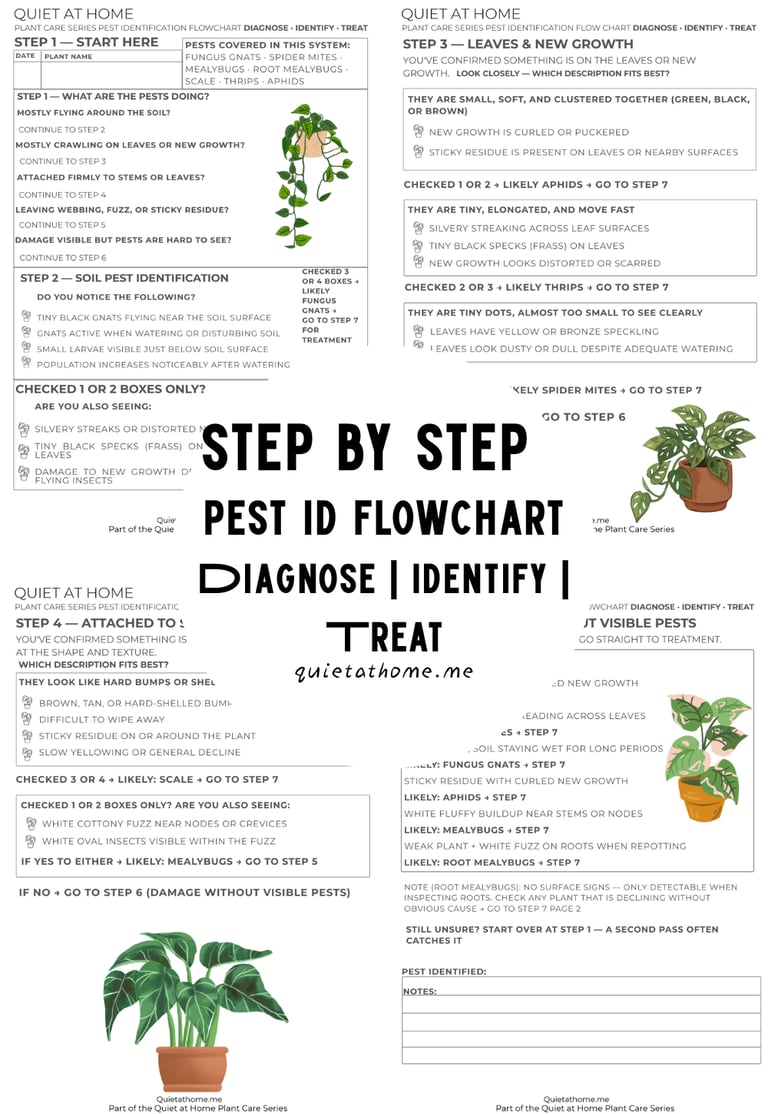
Fungus gnats are one of the easier pests to identify - but if you're looking at your plant and something just seems off and you're not sure what you're looking at, don't guess.
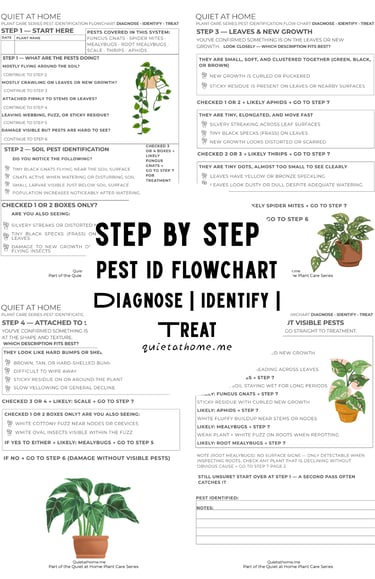
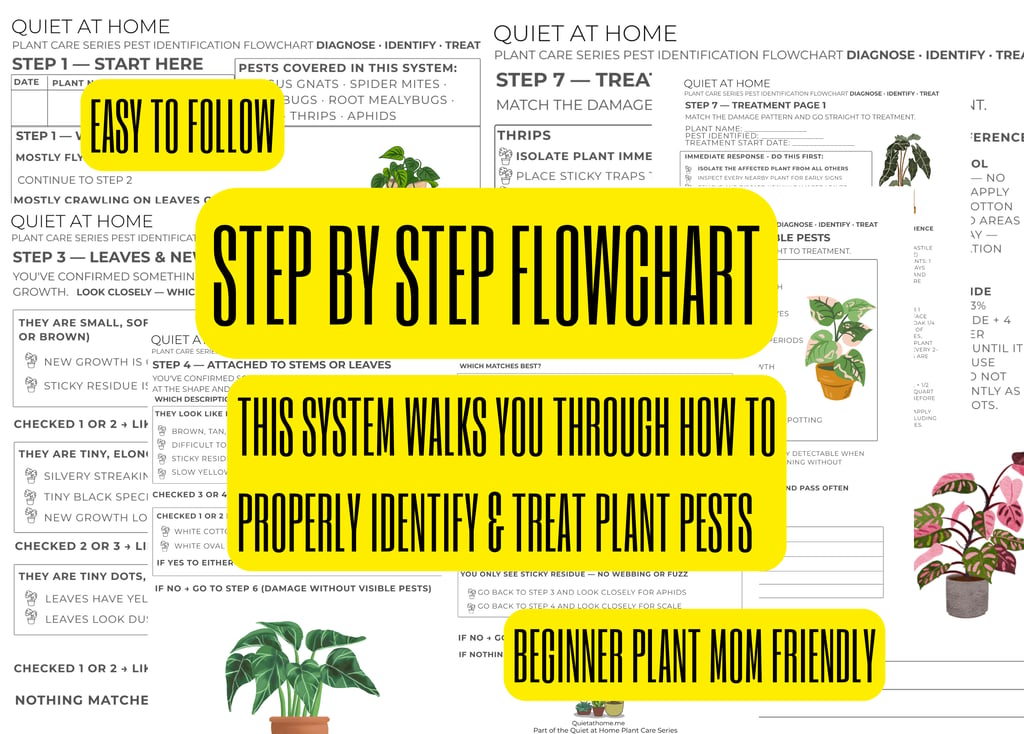
The Quiet at Home Pest ID Flowchart is a 7-step diagnostic system that starts with what you're actually seeing — webbing, white fuzz, black spots, sticky residue, tiny flying bugs — and walks you all the way through to the exact pest and exactly how to treat it. It covers seven of the most common houseplant pests: fungus gnats, spider mites, mealybugs, root mealybugs, scale, thrips, and aphids.
No experience needed. You just answer what you see.
→ grab the pest ID flowchart here
Q1: What are fungus gnats and where do they come from?
Fungus gnats are tiny dark flies — about 1/8 inch long — that look like miniature mosquitoes. They don't come from thin air. Eggs are typically already laid in the soil of a new plant before you bring it home (The Old Farmer's Almanac) , or they hitch a ride in a bag of potting mix. Once they're in, damp soil keeps them breeding.
Q2: Are fungus gnats harmful to humans or pets?
No. Fungus gnats lack the mouthparts necessary for biting and pose no direct physical threat to people or pets. (Link Assistant) They're purely a nuisance to you — and a real threat to your plant's roots.
Q3: Do fungus gnats damage plants?
The adults don't. The larvae do. Fungus gnat larvae feed on decaying organic matter and sometimes plant roots, which can cause yellowing leaves, wilting, and slow growth. (Link Assistant) A small infestation is mostly annoying. A big one can genuinely kill a plant.
Q4: What's the fastest way to get rid of fungus gnats?
Hit both stages at once. Let the top 2 inches of soil dry out completely (this stops larvae from surviving), apply Mosquito Bits to kill larvae already in the soil, and put out yellow sticky traps to catch the adults before they lay more eggs. Because adult gnats only live around 7 days, breaking the breeding cycle can clear an infestation in about two weeks. (Semrush)
Q5: Does hydrogen peroxide kill fungus gnats?
Yes, for the larvae. Mix one part 3% hydrogen peroxide with four parts water and pour it through the soil at the root zone — it kills fungus gnat larvae on contact. (Semrush) That said, peroxide applied in high doses can damage your plant (ahrefs) , so don't overdo it. Mosquito Bits are gentler and equally effective.
Q6: Does cinnamon actually work on fungus gnats?
Partially. Cinnamon has antifungal properties that can make the soil less hospitable, but it won't eliminate an active infestation on its own. MSU Extension advises against cinnamon as a primary treatment (ahrefs) — it's a supplement at best, not a solution.
Q7: Can fungus gnats spread between plants?
Yes. Since their preferred food is fungal growth, they can pick up spores from infected plants or soil and spread disease to others. (Semrush) If one plant has them, check everything nearby. Quarantine newly acquired plants for three to four weeks (Semrush) before placing them with your collection.
Q8: How long do fungus gnats live?
Not long — but they reproduce fast. Adult fungus gnats live about 7 to 10 days, but a single female can deposit 100 to 300 eggs. Eggs hatch in 4 to 6 days, larvae feed for 12 to 14 days, and the pupal stage lasts about 5 to 6 days (UMN Extension) — meaning a new generation every few weeks if conditions stay right.
Q9: Why do I keep getting fungus gnats even after treating?
Because you stopped too early. The life cycle overlaps — while you're killing adults, there are still eggs hatching. You need to treat through at least 2 to 3 full cycles (4+ weeks) to catch every generation. The other reason: the soil is still staying too moist between waterings, which means conditions never actually changed.
Q10: How do I make sure fungus gnats never come back?
Stop watering on a schedule. Fungus gnats can be controlled long-term by allowing the growing medium to dry out between waterings. (Ahrefs) If the top 2 inches of soil stay dry, gnats have nowhere to lay eggs. That single habit change does more than any product.
Frequently Asked Questions About Fungus Gnats
Your soil mix is probably the problem


most potting mixes straight from the bag aren't cutting it. grab the free recipe guide and see exactly what your plants actually need.
Create a Reliable Indoor Plant Care Foundation
If your plant care feels inconsistent, your soil is often the starting point.
A balanced indoor soil mix gives you a stable foundation so watering becomes easier, roots stay healthy, and plants grow more predictably.
Instead of constantly adjusting your care routine, start with a mix that works with your environment.
Fix your plant setup + stay consistent →
Build a reliable plant system
Not sure what mix is right for you?
Ready to build your full plant setup?