
philodendron erubescens ‘pink princess’
pink princess philodendron care guide
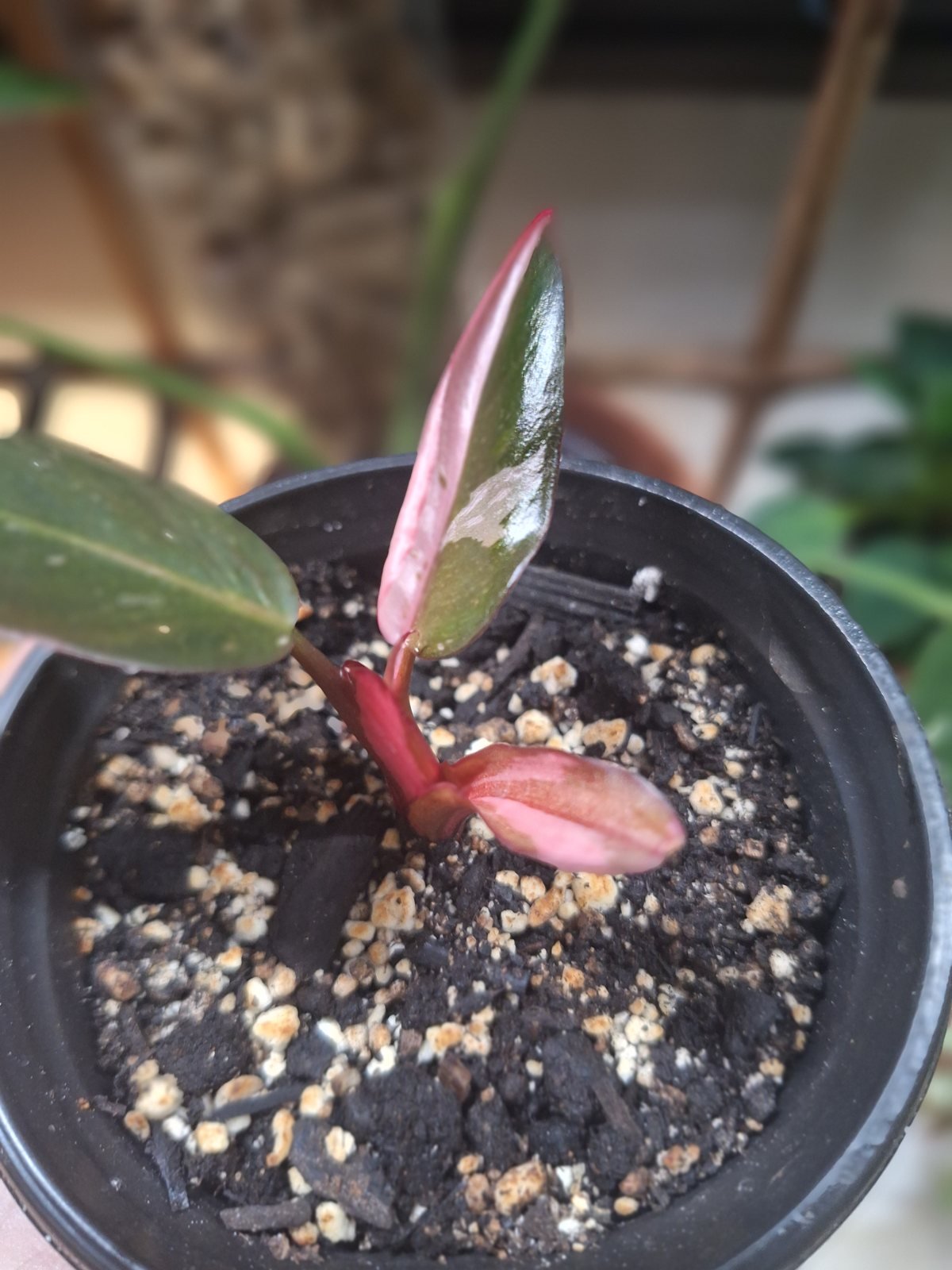
pink princess is famous for dark, almost black leaves splashed with bubblegum pink. the pink comes and goes depending on genetics and care, so the goal is steady, balanced variegation. here is how to get it.
quick care card
| light | bright indirect; a little gentle sun |
| water | when the top half of the soil is dry |
| soil | chunky aroid mix |
| humidity | 50–70% |
| temperature | 18–29°c / 65–85°f; keep above 13°c / 55°f |
| fertilizer | diluted liquid feed monthly in spring and summer |
| growth habit | climbing; loves a moss pole |
| pet safety | toxic to cats and dogs |
| difficulty | intermediate |
light
bright, indirect light is the key to keeping pink on new leaves. in low light it tends to push out darker, plainer leaves. a little soft morning sun is fine, but strong direct sun scorches the pink sections first.
watering
water deeply when the top half of the soil is dry. keep watering steady; big swings between bone dry and soaked cause brown spots on the pink areas.
soil & potting
use a chunky aroid mix that lets air reach the roots: roughly 1 part potting mix, 1 part orchid bark, 1 part perlite or pumice, with a handful of worm castings or horticultural charcoal if you have it.
humidity & temperature
50% or higher keeps leaves large and edges clean. it does fine in normal homes, but dry winter air can brown the pink.
fertilizing
feed monthly in spring and summer with a balanced liquid fertilizer at half strength.
pet safety
toxic to cats, dogs and people if chewed or eaten. the leaves and stems contain insoluble calcium oxalate crystals that can cause mouth irritation, drooling, pawing at the mouth and vomiting. keep it on a high shelf or hanging planter and away from curious pets and kids.
how to propagate pink princess
- take a stem cutting just below a node, ideally one with an aerial root.
- choose a section that has both pink and dark green on the leaves.
- root it in water, moist sphagnum moss or perlite, kept warm and humid.
- expect roots in 2 to 4 weeks.

common problems & fixes
- losing pink: more light. if a vine goes fully dark green for several leaves, prune back to the last variegated node.
- too much pink: all pink or mostly pink leaves cannot feed the plant and often brown. pruning to a balanced node helps.
- brown pink patches: normal over time on heavily pink leaves; also from dry air or too much sun.
- yellow leaves: overwatering or old leaves aging.
- pests: thrips, mealybugs and spider mites.
pink princess faqs
why is my pink princess turning brown?
the pink parts are the weakest tissue and brown first from sun, dry air or uneven watering. a little browning on very pink leaves is normal.
is my pink princess fake?
some plants were once sold with dyed or injected pink, and those fade within months. real pink princess variegation shows on new leaves as they unfurl.
how do i make my pink princess more pink?
you cannot force it, but bright light and pruning back to well variegated nodes give you the best chance.
keep learning
go deeper with quiet at home plant care guides, made to help you stop guessing and start growing.