
epipremnum aureum ‘pearls and jade’
pearls and jade pothos care guide
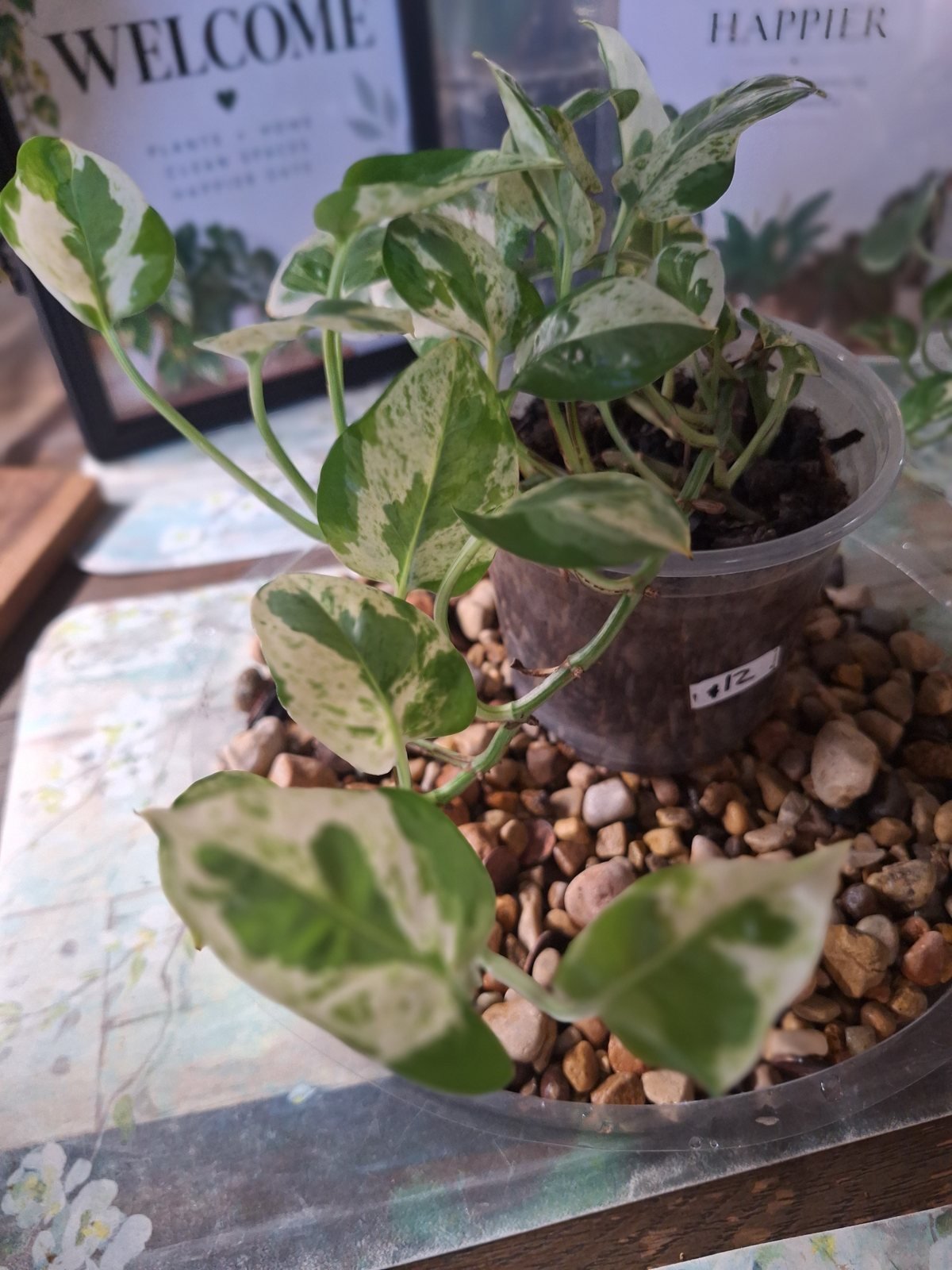
pearls and jade is a patented pothos from the university of florida with small, painted leaves in green, grey green and creamy white. it is slower and a little fussier than golden pothos, mostly about light. give it the right spot and it becomes a delicate, speckled cascade.
quick care card
| light | bright indirect (more than other pothos) |
| water | when the top half of the soil is dry |
| soil | chunky, fast draining aroid mix |
| humidity | 40–60%; higher keeps edges cleaner |
| temperature | 18–29°c / 65–85°f; keep above 10°c / 50°f |
| fertilizer | diluted liquid feed monthly in spring and summer |
| growth habit | slow trailing vine |
| pet safety | toxic to cats and dogs |
| difficulty | beginner to intermediate |
light
the white areas on each leaf have no chlorophyll, so this pothos needs more light than its green cousins to grow well. aim for bright, indirect light most of the day, like near an east window or a few feet from a south or west window. in low light it grows very slowly and new leaves come in smaller. an hour or two of gentle morning sun is fine.
watering
water deeply, then let the top half of the soil dry. because it grows slowly, it uses less water than golden pothos, so overwatering is the most common way to lose one. if in doubt, wait a few more days.
soil & potting
use an airy mix: 2 parts potting mix, 1 part perlite, 1 part orchid bark. keep it slightly snug in its pot; a pot that is too big stays wet too long.
humidity & temperature
normal indoor humidity works, but 50% or higher helps prevent the brown spots and crispy edges this variety is known for. keep it away from heating and cooling vents.
fertilizing
feed at half strength monthly in the growing season with a balanced liquid fertilizer. the white sections burn easily, so never overfeed.
pet safety
toxic to cats, dogs and people if chewed or eaten. the leaves and stems contain insoluble calcium oxalate crystals that can cause mouth irritation, drooling, pawing at the mouth and vomiting. keep it on a high shelf or hanging planter and away from curious pets and kids.
how to propagate pearls and jade pothos
- take a cutting with at least one node and one or two leaves.
- choose cuttings with a good mix of green and white; mostly white cuttings root slowly and can fail.
- root in water or moist sphagnum moss in bright, indirect light.
- expect roots in 2 to 4 weeks, a bit slower than golden pothos.
- pot up when roots are 2–5 cm / 1–2 in long and keep evenly moist for the first couple of weeks.
common problems & fixes
- brown spots on white areas: common with this variety. usually from inconsistent watering or low humidity. trim badly damaged leaves.
- very slow growth: needs more light.
- yellowing: overwatering or a pot that is too large.
- reverting to green: more light; trim back to a well variegated node if a vine goes plain.
- pests: check for thrips and spider mites, which love stressed leaves.
pearls and jade pothos faqs
what is the difference between pearls and jade and n’joy pothos?
both have small white and green leaves. pearls and jade has speckles and grey green streaks painted inside the white, while n’joy has cleaner, separate blocks of white and green.
why is my pearls and jade growing so slowly?
it is naturally slow, but low light is the biggest cause. move it brighter.
is pearls and jade rare?
not anymore. it is widely available, though it is still less common than golden or marble queen pothos.
keep learning
go deeper with quiet at home plant care guides, made to help you stop guessing and start growing.