
monstera adansonii · swiss cheese vine, five holes plant
swiss cheese monstera care guide
monstera adansonii is the smaller, vining cousin of the big monstera deliciosa. its leaves are full of oval holes, which is why it is called the swiss cheese plant. let it trail from a shelf or train it up a pole for bigger leaves.
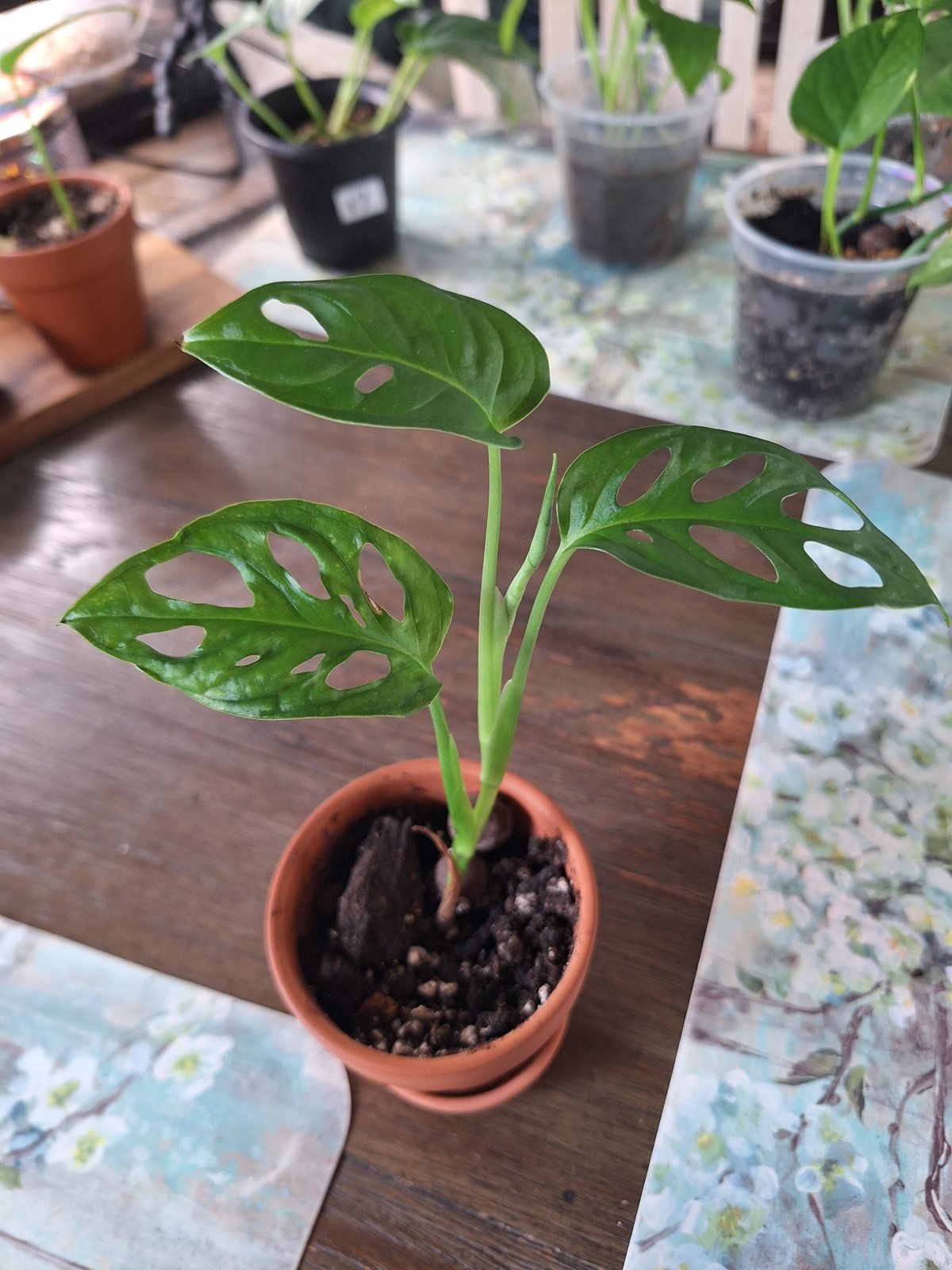
quick care card
| light | bright indirect |
| water | when the top 2–5 cm / 1–2 in is dry |
| soil | chunky, fast draining aroid mix |
| humidity | 50%+ |
| temperature | 18–29°c / 65–85°f; keep above 13°c / 55°f |
| fertilizer | diluted liquid feed monthly in spring and summer |
| growth habit | climbing or trailing vine |
| pet safety | toxic to cats and dogs |
| difficulty | beginner to intermediate |
light
bright, indirect light gives you more holes and faster growth. it can take a little gentle morning sun, but hot afternoon sun burns its thin leaves. in low light it grows leggy with smaller, less holey leaves.
watering
water when the top 2–5 cm / 1–2 in of soil is dry. it likes more consistent moisture than many aroids but still hates soggy soil. thin leaves crisp quickly if it dries out completely.
soil & potting
use a chunky aroid mix that lets air reach the roots: roughly 1 part potting mix, 1 part orchid bark, 1 part perlite or pumice, with a handful of worm castings or horticultural charcoal if you have it.
humidity & temperature
50% humidity or more keeps the thin leaves from browning at the edges and helps new leaves unfurl. a humidifier or grouping plants together helps a lot.
fertilizing
feed monthly in spring and summer with a balanced liquid fertilizer at half strength.
pet safety
toxic to cats, dogs and people if chewed or eaten. the leaves and stems contain insoluble calcium oxalate crystals that can cause mouth irritation, drooling, pawing at the mouth and vomiting. keep it on a high shelf or hanging planter and away from curious pets and kids.
how to propagate monstera adansonii
- cut just below a node, ideally one with an aerial root.
- root the cutting in water, sphagnum moss or moist perlite.
- keep it warm and in bright, indirect light.
- roots appear in about 2 to 3 weeks; it is one of the easier aroids to root.
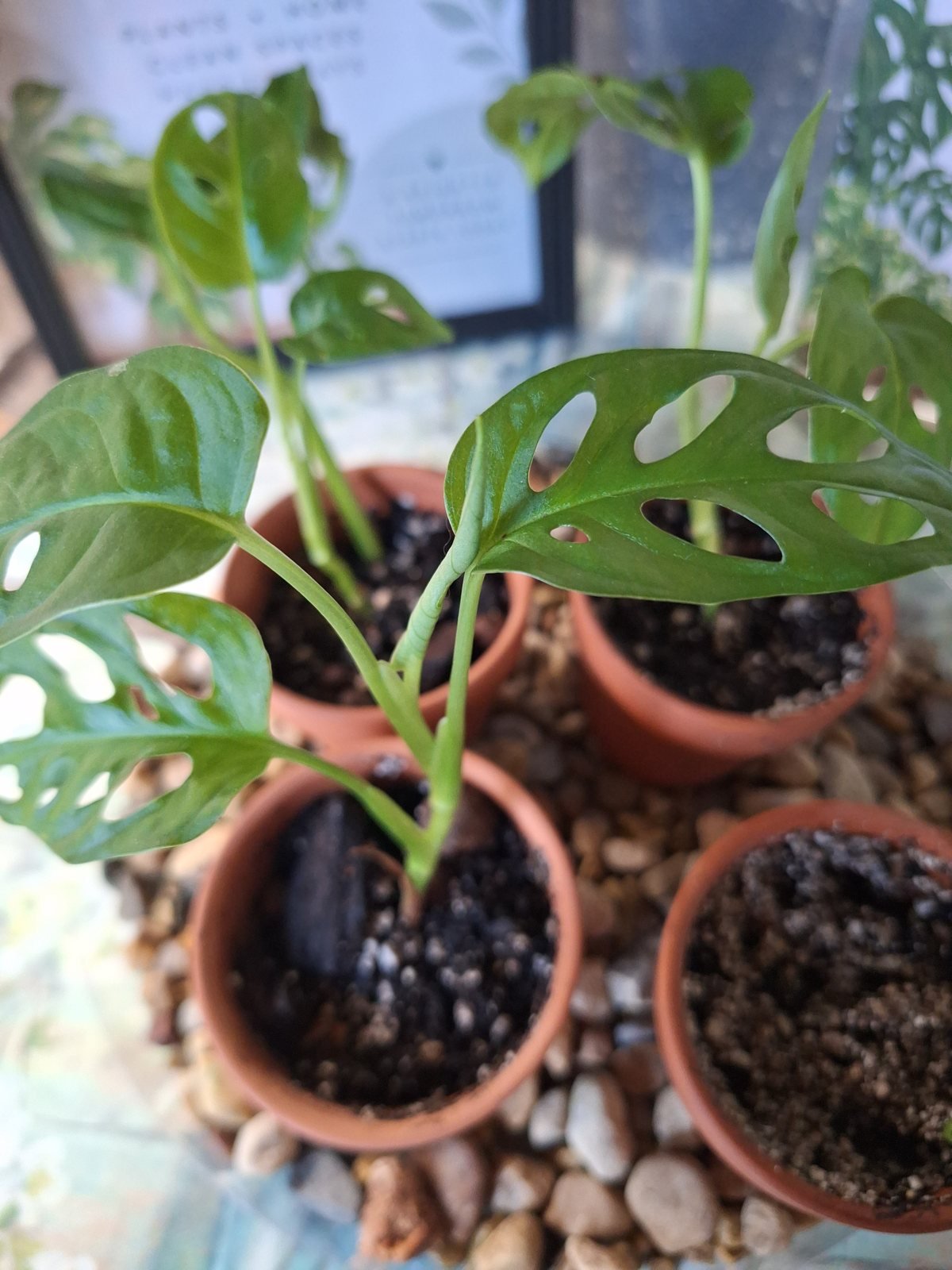
common problems & fixes
- yellow leaves: overwatering or poor drainage.
- brown crispy edges: low humidity or dried out soil.
- no holes on new leaves: needs more light, more maturity, or something to climb.
- leggy growth: too little light; prune and propagate.
- pests: spider mites and thrips, especially in dry air.
monstera adansonii faqs
why doesn’t my adansonii have holes?
young plants and low light both reduce holes. bright light and a moss pole help it mature and make more.
is it the same as monstera deliciosa?
no. deliciosa is a much larger plant with split leaves. adansonii is a smaller vine with holes inside the leaf.
how fast does monstera adansonii grow?
quite fast in warm, bright, humid conditions, often several new leaves a month in summer.
keep learning
go deeper with quiet at home plant care guides, made to help you stop guessing and start growing.